Facial Asymmetry: Orthodontic Options
A slightly uneven smile is normal. True facial asymmetry means one side of the face does not match the other. The difference can sit in the eyes, cheeks, chin, or jaw. Most people have some of it. It becomes an orthodontic question when the bite or the chin is part of why the face looks uneven. This guide is for South Florida parents, teens, and adults who want a plain answer before they book care.
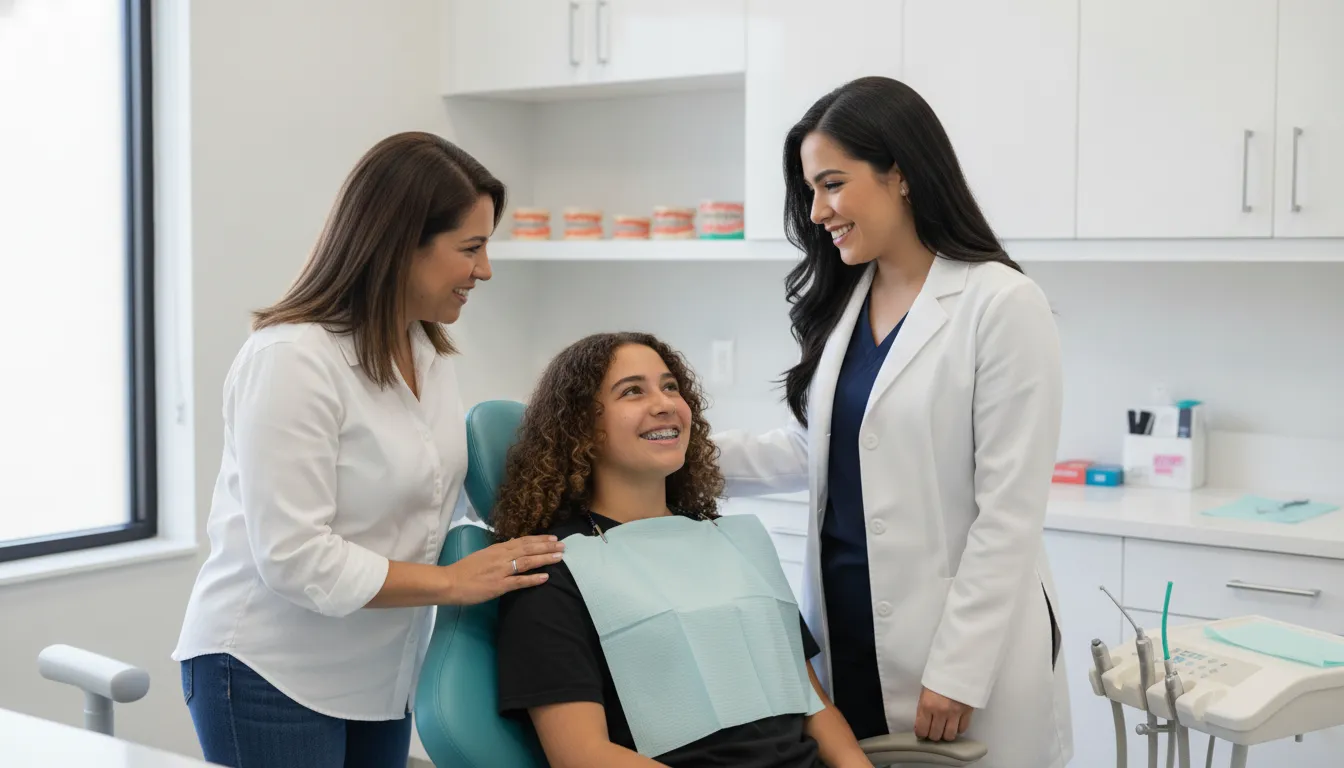
Vista Orthodontics sees children, teens, and adults at seven offices: West Palm Beach, Royal Palm Beach, Pompano Beach, Coconut Creek, Naples, Estero, and Cape Coral. An exam can tell you whether braces, clear aligners, or growth guidance may help, or whether the look of the face is outside what tooth movement can change.
What Facial Asymmetry Usually Means
Penn Medicine describes facial asymmetry as one side of the face looking different from the other. A jawline, eye, or cheek may not match its partner. Small differences are expected. Nobody’s face is a perfect mirror, and a computer score of your photo is not a diagnosis.
The useful split is between a look you notice in photos and a difference that changes how you chew, speak, or close your lips. A mild tilt of the nose or one ear sitting a little higher is common. A chin that slides to one side when you bite, or teeth that only meet on one side, is a different problem. That second pattern is the one an orthodontist is trained to evaluate.
Photos can exaggerate the issue. Phone cameras, lighting, and a slight head turn all make one side look fuller. Before you judge a selfie, look in a mirror with your teeth gently together and your head level. If the unevenness is still obvious, and it bothers you or your child, it is worth an exam. It is not an emergency by itself.
When an uneven face needs a medical check first
New, sudden, or one-sided weakness is not a braces question. Drooping, numbness, trouble speaking, or a face that changed over hours can be a nerve or medical problem, including Bell’s palsy or stroke. Those symptoms need urgent medical care, not an orthodontic appointment. Orthodontic care is for gradual differences tied to teeth, bite, and jaw growth.
Signs a Bite May Be Part of the Uneven Look
An orthodontist looks at the teeth and the jaws together. Dental and jaw issues can shift how the face sits, including crowded teeth and a bite that does not line up. These are the patterns families usually notice first:
- The chin points to one side when the back teeth come together.
- The midline of the upper teeth does not line up with the lower teeth.
- One side of the back teeth hits first, so chewing favors one side.
- The lower jaw looks narrow, wide, or set back compared with the upper jaw.
- A child shifts the jaw to one side to make the teeth fit.
- Lips do not close comfortably without strain.
A midline that is off by a small amount is common and is not the same thing as a jaw that grows unevenly. This article does not walk through midline treatment. If the center of the smile is the only concern, ask about that at the exam rather than treating it as a full facial problem.
Bite names you may hear include overjet, crossbite, open bite, underbite, and deep bite. Each has its own treatment path, so this page does not turn into a how-to for any one of them. The shared point is simpler. If a bite forces the jaw off center, fixing how the teeth meet can make the face look more even. If the bones themselves grew differently, moving teeth alone will not rebuild that shape.
What an Orthodontic Exam Can and Cannot Change
An exam starts with the face at rest and with the teeth together. The orthodontist checks how the jaws line up, whether a shift is a habit or a locked bite, and how the teeth fit. Photos and X-rays, including the views used to measure jaw position, show whether the difference is in the teeth, the bone, or both. Penn Medicine notes that this kind of imaging is how clinicians separate a mild difference from one that affects function.
Tooth movement can improve the way the smile frames the face. Closing spaces, lining up a shifted bite, and giving the jaw a stable place to rest often make mild unevenness less noticeable. It cannot change eye size, ear position, cheek volume, or a nose that leans. Fillers, implants, and nose surgery are cosmetic or surgical choices, not orthodontic ones, and Vista does not provide them.
Larger bone differences sometimes need an oral surgeon as well as an orthodontist. Braces or aligners prepare the teeth, and surgery repositions the jaw. That plan is planned with a surgeon. It is not something to start from a photo or a home exercise. Significant jaw differences can also affect breathing during sleep, which is another reason a real exam matters more than a mirror test.
| What you notice | What an exam is checking | What orthodontics may do |
|---|---|---|
| Chin slides to one side only when biting. | A shifted bite, rather than uneven bone growth. | Guide the bite to a centered rest position. |
| Back teeth meet on only one side. | A one-sided bite that favors one jaw joint. | Level the bite so both sides share chewing. |
| Narrow upper jaw in a growing child. | Room for the teeth and the bite width. | Guide growth while the jaw can still widen. |
| Chin is off center at rest and in photos. | Jaw size or position, not only tooth position. | Align the teeth, and refer if surgery is needed. |
| One eye, ear, or cheek looks different. | Soft tissue or features outside the bite. | Usually no change from braces or aligners. |
Use the table as a starting point, not a diagnosis. Two people can share a photo and need different plans. Age, growth, and how the teeth meet decide the path.
A photo cannot show whether the jaw shifts only when the teeth touch. That is why the exam watches you bite, not just how you look at rest. Parents often notice the change in a school picture. Adults often notice it on video calls. Both are fair reasons to ask. Neither one tells you the treatment.
Orthodontic Options for a Bite-Related Uneven Face
Vista matches the appliance to the bite, the age, and the look the patient wants. The goal is a stable bite and a smile that sits more evenly in the face. It is not a promise of perfect symmetry. These are the options used in the offices.
Metal, ceramic, and gold braces
Metal braces still give the most control when a bite has to be rebuilt, not just straightened. They are a common choice for teens and for adults whose uneven look comes from how the teeth and jaws meet. Clear ceramic braces do similar work with brackets that blend in. Gold braces are another Vista option for patients who want that look. Same-day braces are available when the exam shows you are ready to start.
Invisalign and Angel clear aligners
Invisalign and Angel clear aligners can correct many bite problems that make a smile look uneven, including crowding and mild-to-moderate jaw-position issues in the right case. Aligners are removable, so they suit adults and teens who want a low-profile option. They are not the automatic choice for every shifted jaw. If the case needs stronger control, braces are the honest recommendation.
Vista is a Top 1% Worldwide Invisalign Diamond Provider. That volume matters when the plan has to do more than close small gaps. It does not mean aligners replace a surgical plan when the bones are the source of the asymmetry.
Growth guidance for children
A growing child is the one group where timing can change the width and path of the jaws. The American Association of Orthodontists encourages a first orthodontic visit by age 7, while many permanent teeth are in and the jaws are still growing. At that age, a narrow upper jaw can sometimes be widened, and a bite that pushes the jaw to one side can be unlocked before it becomes a habit.
Not every child needs treatment at that visit. Many are watched while the face grows. Vista’s early orthodontic treatment page covers how those checkups work. This guide stays on the facial question: if a young child’s chin or smile looks uneven, an early visit tells you whether growth guidance can help or whether waiting is safer.
Adults
Adults can still improve a bite-related uneven smile. Braces and aligners move teeth at any age. What they cannot do is restart jaw growth. If the chin or jaw shape is the main concern, the exam may include a surgical consult.
Adult treatment at Vista fits work and social schedules. Free consultations are available, along with low monthly payments, a $0 down option, and 0% interest in-office financing. Insurance is accepted. A specific fee depends on the plan, so the consult is where numbers get real.
How to Decide What to Do Next
You do not need a perfect photo series before you call. You do need a short record of what you see, so the visit starts with your question instead of a general screening.
- Take one front photo at rest and one with your teeth gently together, in even light.
- Note whether the chin or smile looks off only when biting, or also at rest.
- Write down chewing trouble, jaw noise, or a habit of sliding the jaw to one side.
- For a child, note their age and whether permanent teeth are still coming in.
- Bring that note to a free consultation and ask what tooth movement can and cannot change.
Sudden weakness, numbness, or trouble speaking should go to urgent medical care first. A gradual change in the smile or chin can wait for an orthodontic visit. If a dentist has already mentioned a crossbite, underbite, or similar bite problem, say so. Those plans live on their own pages later. The exam still starts with the face you are worried about.
Choosing an office is straightforward. East-coast families can use West Palm Beach, Royal Palm Beach, Pompano Beach, or Coconut Creek. West-coast families can use Naples, Estero, or Cape Coral. The same doctors and the same free consult are available across the group. The locations page lists each office.
If an uneven smile or chin is on your mind, call (561) 328-1555 or request a free consultation. A Vista orthodontist can tell you whether braces, aligners, or growth guidance fit the bite you have.
Frequently Asked Questions
Is facial asymmetry normal?
Yes. Almost everyone has some difference between the two sides of the face. It only needs an orthodontic look when the bite, chin position, or jaw function is part of what you see, or when the change is new.
Can braces fix facial asymmetry?
Braces can improve asymmetry that comes from how the teeth meet and where the jaw rests. They do not change eyes, ears, cheeks, or a jaw shape that grew unevenly. Those cases may need a surgeon as well as an orthodontist.
Can Invisalign help an uneven smile?
Often, when the uneven look is tied to crowding or a bite aligners can correct. Vista offers Invisalign and Angel aligners. The exam decides whether aligners have enough control or whether braces are the better tool.
When should a child be checked for an uneven jaw?
The American Association of Orthodontists recommends a first visit by age 7. Many children are only monitored. A child who shifts the jaw to one side to bite is a good reason not to wait.
Does facial asymmetry get worse with age?
Soft-tissue changes and tooth wear can make a mild difference easier to see over time. A bite that forces the jaw to one side can also become a habit. An exam is the way to know whether anything is changing in a way treatment should address.